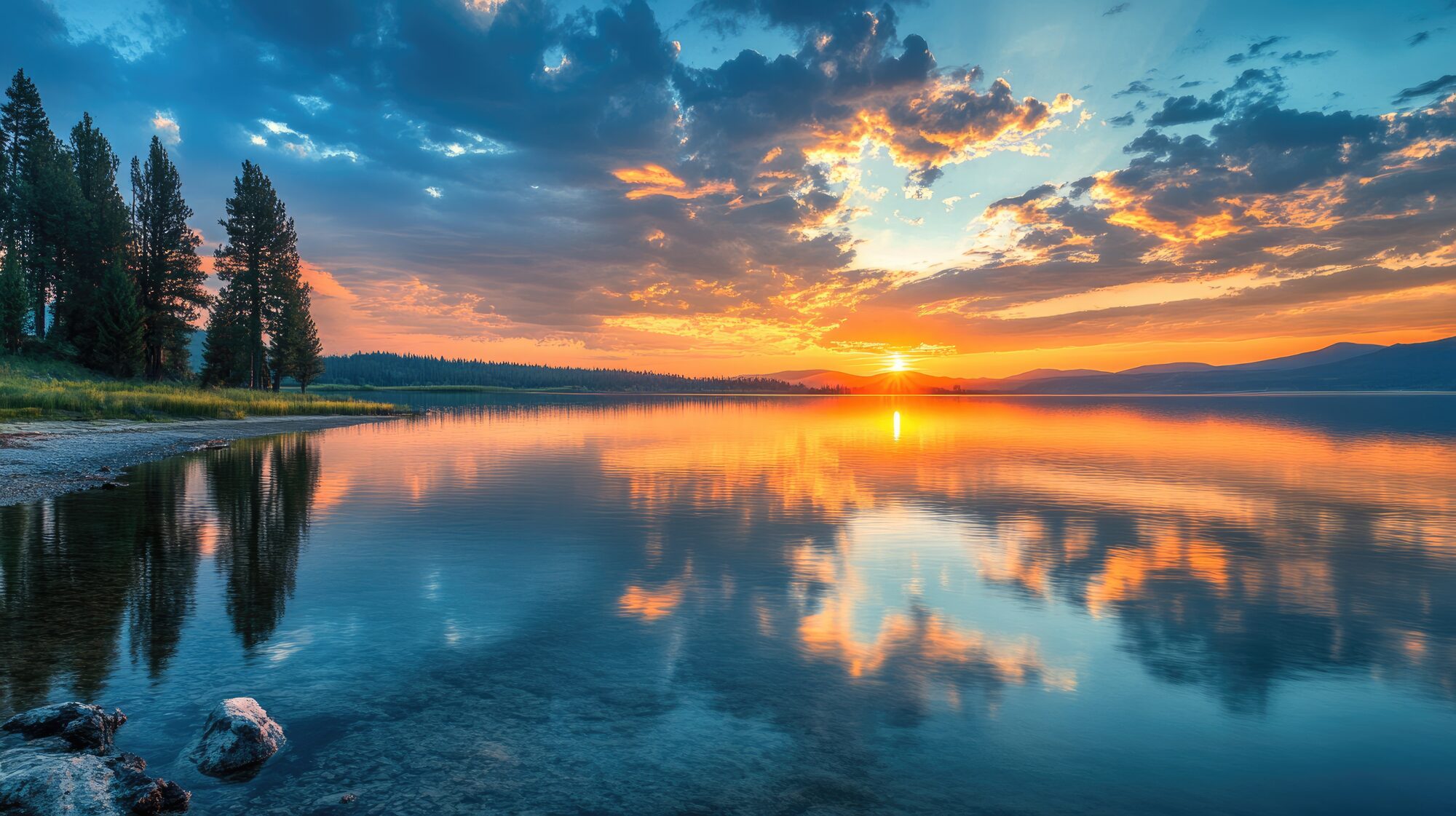
Two great lakes, two different fisheries
Henry’s Lake and Hebgen Lake sit twenty miles apart and both fish brilliantly — but they are not the same lake. Henry’s is a small (6,500 acres) Idaho impoundment managed as a trophy fishery for hybrid cutthroat and brook trout. Hebgen is a much larger Montana reservoir (16+ miles long, 4 miles wide) with rainbows, browns, and whitefish over 20 inches plus cutthroat and brookies in the 12–14″ range.
Both lakes are spring-fed at high elevation, both sit subject to ferocious daily winds, and both reward anglers who fish the bays and submerged vegetation in early morning or late evening.
Henry's Lake (Idaho)
The fishery
Henry’s Lake has been managed as a trophy fishery since 1976 (Idaho Fish & Game). The lake is nutrient-rich, fish growth is fast, and 18″ trout are common. The flagship species are Yellowstone cutthroat-rainbow hybrids (locally called “Cutbows”) and brook trout, both of which can exceed 20 inches and 5 pounds, with individual fish documented over 10 pounds.
Regulations (Idaho F&G)
- Daily limit: two trout, must include brook trout. Once you have two fish, you stop.
- Fishing hours: 5 AM to 9 PM
- Required: barbless hooks, sliding swivel device with weight, lighter test line on the weight (current Idaho rules — verify before fishing)
- Bait fishing is permitted (unlike most premier fly waters)
How to fish it
Fly fishing is the most popular method. Cutthroat feed primarily on insects as adults — damselflies, callibaetis, midges, and leeches all work. Stillwater tactics: indicator-and-leech in deeper water early, or chironomid suspension during midge hatches.
For brook trout in fall, target stream mouths during September and October when they briefly congregate before spawning.
For all species in low-light hours: deep water near drop-offs at dawn and dusk.
Access
Henry’s Lake State Park provides the main access — boat ramps, restrooms, a small campground. State park entry fee applies. Boats: a small motor is useful but not essential; many anglers use float tubes or pontoon boats. Henry’s Lake State Park.
Hebgen Lake (Montana)
The fishery
Hebgen is 6,500 acres, 16+ miles long, 4 miles wide. Located just outside West Yellowstone, Montana. Built by Montana Power Company in 1915 (one of the older impoundments in the region). The lake holds wild populations of rainbow trout (often exceeding 20 inches), brown trout (similar size class, more elusive), cutthroat trout (12–14 inches average), brook trout, and Rocky Mountain whitefish.
Hebgen is “without argument one of the finest dry fly fishing lakes in Montana, or for that matter the entire Northwest” per Red Rock Adventures — particularly for the famous Callibaetis & gulper hatch in July and August.
The Gulper hatch (mid-July through mid-August)
Hebgen’s signature event. Callibaetis (small mayflies) hatch on flat water in the mornings, and large rainbow and brown trout cruise the surface gulping them. Sight-fishing to specific cruising fish with size 14–16 callibaetis duns is the canonical Hebgen experience. The hatch demands a slow, careful approach — the fish are wary in flat water.
Regulations
Montana fishing license required (separate from Idaho). Buy at any tackle shop in West Yellowstone or online at fwp.mt.gov. Hebgen has standard Montana stillwater regulations — consult the current Montana FWP regulations.
Access
Multiple Forest Service campgrounds and boat ramps line the lake. The largest concentration of access is on the south arm near the dam, but the West Madison Arm and Grayling Arm are equally productive and less pressured.
When to fish each lake
Henry’s Lake
Best months: June and September. June for high catch rates as fish are recovering from ice-out and aggressively feeding. September for brook trout staging at stream mouths and for cooler water bringing the larger cutthroat to the surface.
Hebgen Lake
Best months: July and August for the gulper hatch. May and June for spring streamers. September through ice-up for big browns on streamers as they pre-spawn.
Both lakes — wind
Both sit on high-altitude plateaus and get strong daily winds, particularly midday. The bays and arms (Henry’s has multiple inlets; Hebgen has the Madison and Grayling arms) provide protection from afternoon wind. Fish the bays when the main lake gets ugly.
Questions, answered
Can I fish both lakes in one trip?
Easily. They’re 20 miles apart. Many anglers based in Island Park fish Henry’s in the morning, drive over Targhee Pass to Hebgen for afternoon, or vice versa. You need both an Idaho and a Montana license to do this.
What about Quake Lake (the lake downstream of Hebgen)?
Quake Lake was formed by a 1959 earthquake landslide that dammed the Madison River. It holds large brown trout but is much smaller, less accessed, and more technical to fish. Worth a half-day if you have time and a boat.
Boat or wade?
Both lakes are primarily fished from boats — pontoon boats, float tubes, or small motorboats. Wade access exists at the inlets but is limited. A pontoon boat opens up most of either lake.
Guided trips?
Multiple Island Park and West Yellowstone shops guide both lakes. Henry’s Fork Anglers and TroutHunter both guide Henry’s Lake. West Yellowstone fly shops guide Hebgen.