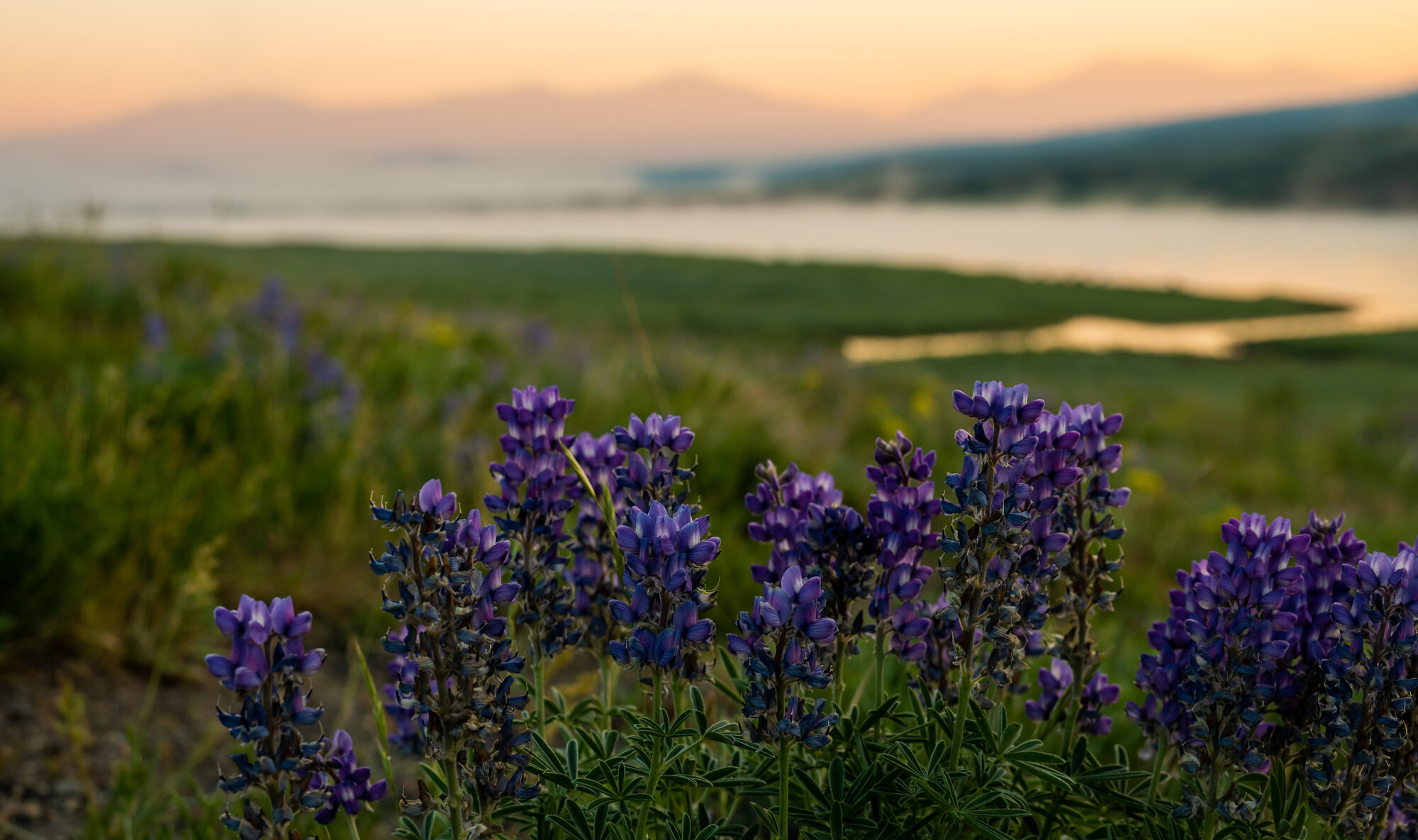
Yellowstone's west entrance sits in West Yellowstone, Montana — about 30 minutes north of Island Park, Idaho via U.S. Highway 20. The west entrance opens to private vehicles around mid-April through early November (dates set by NPS each season). A day trip from Island Park covers the western loop: Madison River, Norris Geyser Basin, Old Faithful, and back through West Yellowstone — roughly 140 miles round-trip.
Why the west entrance is the right choice from Island Park
Yellowstone has five entrances. From Island Park, the west entrance is the one you want. It’s twenty-nine miles north on US-20, the drive takes thirty-one minutes, and it puts you on the side of the park where the most famous geyser basins are concentrated — Old Faithful, Grand Prismatic, Norris, Lower Geyser Basin, Mammoth’s neighbor Madison Junction.
The trade-off, if you’re honest about it, is that the west side’s wildlife isn’t as concentrated as the Lamar Valley on the northeast side, where bison and wolves and grizzlies feed in plain sight. From the west, you see plenty of wildlife — bison are routine, elk are routine, bears appear in the Hayden and Madison areas — but if your priority is wolf-watching at dawn, you’re going to want a separate trip to the northeast side.
If your priority is geysers, hot springs, and the strange volcanic landscape that made Yellowstone the world’s first national park: the west entrance is exactly the right call.
Hours, fees, and what to buy in advance
2026 entrance fees (NPS)
From the National Park Service official fee page (nps.gov/yell/planyourvisit/fees.htm):
- 7-day Yellowstone vehicle pass: $35 (single non-commercial vehicle, all passengers included)
- Yellowstone Annual Pass: $70 (Yellowstone-only)
- America the Beautiful Pass: $80 (all national parks for one year, including Yellowstone)
- Senior Lifetime Pass: $80 (62+, all parks, lifetime)
- Nonresident surcharge (begins 2026): $100 per non-US visitor age 16+, in addition to the entrance fee, unless using an Annual Pass
The America the Beautiful Pass pays for itself if you’re visiting any other national park or monument within the same calendar year — including Grand Teton (one hour south of Yellowstone’s south entrance).
Gate hours
The west entrance operates 24 hours a day during open seasons. Wheeled-vehicle season runs from the third Friday in April through the first Sunday in November, after which the road inside the park transitions to oversnow vehicles (snowmobile and snowcoach) from approximately December 15 through March 15, road conditions permitting (NPS: Operating Dates).
In 2026, the west entrance opened to wheeled vehicles on April 17.
Buy in advance, or at the gate
You can buy any pass at the gate (cards or cash), or in advance via recreation.gov. For peak summer mornings (mid-June through August), advance purchase saves 10–30 minutes of gate line. The west entrance lines back up into West Yellowstone on weekends in July.
Reservations
Unlike a few national parks, Yellowstone does not require timed-entry reservations. You can show up at the gate any time, any day.
What's how far inside
Drive times from the west entrance gate, by paved road inside the park:
- Madison Junction: 14 miles, ~25 min — where the Madison and Gibbon Rivers form the Madison River. Bison frequent the meadows here.
- Norris Geyser Basin: 28 miles, ~50 min — oldest, hottest, and tallest active geysers. Steamboat Geyser (when erupting) is the world’s tallest active geyser.
- Lower Geyser Basin (Fountain Paint Pots): 22 miles, ~40 min — mud pots and small geysers, easy boardwalks, less crowded than Old Faithful.
- Midway Geyser Basin (Grand Prismatic): 28 miles, ~50 min — the iconic rainbow-rimmed spring. Best viewed from the Fairy Falls overlook trail (half-mile uphill walk; the boardwalk view is at ground level and less photogenic).
- Old Faithful: 32 miles, ~55 min–1 hour — the geyser everyone knows.
- Mammoth Hot Springs: 50 miles, 1.5 hours — travertine terraces. Worth a half-day on its own.
- Canyon Village / Grand Canyon of the Yellowstone: 40 miles, ~1 hour 15 min
- Hayden Valley (wildlife): ~45 miles, ~1 hour 20 min — bison herds, often bears.
- Lamar Valley (best wildlife): ~85 miles, ~2.5 hours — the northeast side. A long day or an overnight in Cooke City.
Inside-park speed limits are 45 mph max, often lower, and wildlife jams routinely add 30–60 minutes to any drive. The numbers above assume normal pace, no major wildlife jam, no road construction.
Old Faithful, planned correctly
Old Faithful is the only major geyser in the world that’s reliably predicted by the rangers — eruptions are forecast with about 90% accuracy in a ten-minute window.
How often it erupts
About every 90 minutes, plus or minus ten. Specifically: 65 minutes after a short eruption (under 2.5 minutes), 91 minutes after a long one (over 2.5 minutes). Eruptions last 1.5–5 minutes, shoot 3,700–8,400 US gallons of boiling water 106–185 feet in the air (Wikipedia / NPS). Roughly twenty eruptions per day.
How to know when
The official NPS predictions are posted at the Old Faithful Visitor Center and updated digitally on the NPS app and on nps.gov/yell/planyourvisit/geyser-activity.htm. Plan your day around the prediction — arriving 20 minutes ahead, walking the surrounding boardwalk during the wait, and timing the wait so you also see one of the nearby geysers (Beehive, Castle, Riverside) erupt.
The mistake most people make
They watch Old Faithful for two minutes, then leave. The Upper Geyser Basin around Old Faithful contains the densest concentration of geysers on Earth — Grand Geyser, Beehive Geyser, Castle Geyser, Riverside Geyser. Most are more impressive than Old Faithful when they erupt. Castle Geyser erupts every 10–12 hours and lasts 20 minutes. Beehive shoots higher than Old Faithful. The trick is using the predictions and walking the loop.
Plan two to three hours at the Upper Geyser Basin, minimum.
Three day-trip itineraries
Each starts at the Grandview cabin door in Island Park and ends back there for dinner. All drive times assume reasonable traffic; build a 30-minute cushion for wildlife jams.
Day Trip A: Old Faithful + Grand Prismatic (most famous things)
- 7:30 AM — Leave Island Park. Stop at Henry's Fork Pizza for coffee and a breakfast burrito (or eat at the cabin).
- 8:30 AM — Through west entrance. Drive to Old Faithful (~55 min).
- 9:30 AM — Old Faithful + Upper Geyser Basin loop (2–3 hours).
- 12:30 PM — Lunch at Old Faithful Inn dining room or Geyser Grill.
- 2:00 PM — Drive 8 miles north to Midway Geyser Basin for Grand Prismatic. Park at Fairy Falls trailhead, hike half a mile uphill to the overlook (most photographic angle).
- 4:00 PM — Drive back to Island Park. Stop at Madison Junction for bison if there’s time.
- 5:30 PM — Cabin.
Day Trip B: The full west loop (Old Faithful + Norris + Canyon)
A longer, harder day. The whole 142-mile Grand Loop in one shot.
- 6:30 AM — Leave Island Park early. The early start is the entire point of this itinerary — wildlife is most active and crowds are thinnest before 9 AM.
- 7:30 AM — Through west entrance, head to Old Faithful (arrive ~8:30 AM, watch eruption, walk Upper Basin).
- 11:00 AM — Drive north to Norris Geyser Basin (~1 hr).
- 12:30 PM — Lunch at Canyon Village (Canyon Lodge dining room).
- 1:30 PM — Canyon overlooks: Artist Point (south rim, the canonical view), then walk Uncle Tom’s Trail if open.
- 3:30 PM — Drive south through Hayden Valley (bison guaranteed, bears possible).
- 5:00 PM — Out through west entrance. Dinner in West Yellowstone or back at the cabin.
Day Trip C: Quiet alternative — Lower Geyser Basin + Firehole + early morning Madison
For visitors who’ve been to Yellowstone before and want to skip the worst crowds.
- 6:00 AM — Through west entrance at dawn. Drive to Madison Junction. Bison and elk feed in the meadows here at first light. Bring binoculars.
- 8:00 AM — Lower Geyser Basin (Fountain Paint Pot area). Mud pots, fumaroles, easy boardwalks, almost empty before 9 AM.
- 9:30 AM — Firehole Lake Drive (a 3-mile one-way loop most visitors skip). Great Fountain Geyser erupts here on a predictable schedule.
- 11:00 AM — Back through Madison, west out the gate, lunch in West Yellowstone (Beartooth Grill, Wild West Pizza, the Buffalo Bar are all reliable).
- 2:00 PM — Back at the cabin by mid-afternoon. Fish the Henry’s Fork in the evening.
Wildlife on the west side
You will see bison. Routinely. They cause more vehicle damage and visitor injuries than any other animal in the park.
What to expect, by area
- Madison Junction valley: Bison are nearly always present in the meadows below the junction. Elk are common, especially at dawn and dusk. The Madison River often holds otters; ospreys nest in the dead snags.
- Hayden Valley (1 hr 20 min from west entrance): The wildlife-rich valley on the west side. Bison herds, often grizzlies in spring and fall, occasional wolves at dawn.
- Norris meadows: Smaller herds; less guaranteed than Hayden or Lamar.
- Lamar Valley (2.5+ hours from west entrance): The premier wildlife valley. Wolves, grizzlies, bison, pronghorn, sometimes bighorn sheep. Worth a separate overnight, not a single-day round trip from Island Park.
Wildlife safety rules
- Stay 100 yards from bears and wolves.
- Stay 25 yards from all other large animals (bison, elk, moose, coyotes, bighorn sheep).
- Never approach for a photo. Use a 200mm or longer lens, or your phone’s zoom, from inside or beside your vehicle.
- Carry bear spray on any hike off the boardwalk. Know how to use it before you carry it.
Practical tips that save real time
Fuel before you enter
Gas inside the park is reliable but expensive and lines are long in July. Fill up at the Sinclair in West Yellowstone (just outside the gate), or at the Yellowstone General Store in Island Park before heading north.
Food
The Old Faithful Inn dining room is the most atmospheric meal inside the park — reserve months ahead in summer. Canyon Lodge and Lake Hotel dining rooms are also good. Snack bars and grill counters at major junctions handle casual lunches without reservations. If you’re packing your own: there are picnic areas at Madison Junction, Firehole Falls, and Old Faithful.
Bathrooms
Pit toilets every 10–15 miles on every road; full flush toilets at all major visitor centers and junctions. Old Faithful, Madison, Norris, Canyon, Lake all have full facilities.
Cell coverage
Spotty to nonexistent inside the park. Download the NPS app and offline maps before entering. The NPS app shows real-time geyser predictions.
Construction & closures
Yellowstone always has road work happening somewhere. Check nps.gov/yell/planyourvisit/parkroads.htm for current closures before leaving Island Park. The 2022 flood closed entire sections of the park’s northeast in a single morning; major construction can do similar things on the west side.
If wildlife jams you up
Pull off the road completely. Don’t stop in the lane. If you’re too close to a bison on the road, stay in your vehicle. Honking does nothing. They move when they decide to move.
Where to stop along the way
Three anchors you’ll likely use on the drive in and out of the park.
Sinclair — West Yellowstone
Closest reliable fuel to the west entrance, on Madison Avenue in West Yellowstone. Open year-round with extended summer hours. Diesel available.
Beartooth Grill
A standard family-style West Yellowstone restaurant within walking distance of the park gate. Burgers, sandwiches, salads, kid menu, full bar. Open year-round with extended summer hours.
Old Faithful Inn Dining Room
The most atmospheric restaurant inside Yellowstone — a soaring log-and-stone dining room inside the Old Faithful Inn, the largest log structure in the world. Reservations required in summer, often months in advance. The view of Old Faithful from the upper terrace at sunset is the canonical Yellowstone dinner.
Questions, answered
Can I see Yellowstone in a day from Island Park?
Yes. You see one corner well or the loop in a hurry. Old Faithful + Grand Prismatic + back is a comfortable single day. The full Grand Loop (142 miles inside the park) is doable but tight — you’ll be driving more than walking.
What’s the best time of day to enter?
Before 8 AM. Wildlife is most active, geyser basins are coolest and most photogenic in the slanted light, and you’ll beat the worst of the gate line.
Is the $100 nonresident surcharge per person or per vehicle?
Per person, age 16 and older. A non-US family of four with two adults and two teens pays $200 in surcharge above the $35 vehicle pass — unless they buy an Annual or America the Beautiful Pass, which exempts them.
How do I avoid the worst crowds?
Visit before mid-June or after Labor Day. Within peak season, enter before 8 AM and leave the most famous attractions by 11 AM. Visit smaller basins (Lower Geyser, Norris) instead of Midway / Old Faithful.
Are the geyser basins worth it in winter?
Yes, and the experience is wildly different — snow on the cones, steam-blanketed valleys, far fewer visitors. The west entrance road closes to wheeled vehicles around the first Sunday in November and reopens for oversnow (snowcoach and snowmobile only) approximately December 15 through March 15. Guided snowcoach tours from West Yellowstone are the most common winter option.
Can I bring my dog?
Dogs are allowed in Yellowstone, but only in developed areas (parking lots, roadsides, campgrounds), on a leash no longer than 6 feet. They cannot go on trails, boardwalks, or in the backcountry. Yellowstone is not a dog-friendly park.