The west-entrance reality
The west entrance to Yellowstone puts you in the geyser country — not the wildlife country. The most famous wildlife valley in the park, Lamar, is on the northeast side and is a 2.5-hour drive from the west gate. The wildlife valley closest to the west entrance is Hayden Valley, about 1 hour 20 minutes in.
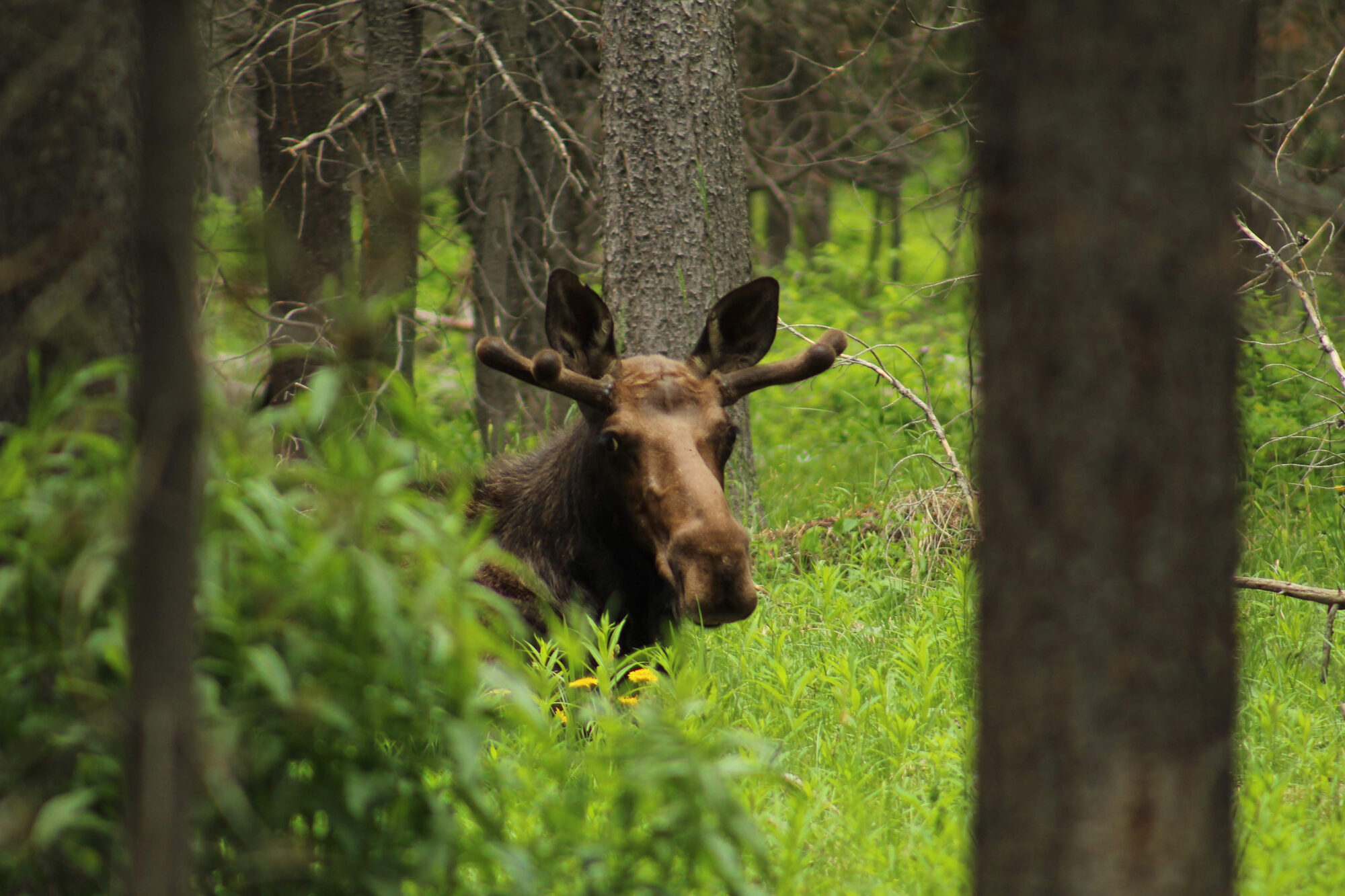
That said, you will see wildlife from the west entrance — routinely. Bison along the Madison and Gibbon rivers. Elk in the meadows at dawn. Sometimes moose. Occasionally bears. The geyser basins themselves usually don’t have wildlife concentrations, but the road corridors between them do.
This guide covers the realistic west-entrance wildlife day — what you can see in a single day, where to be at what time, and when it’s worth driving the extra hours to Lamar.
When animals are out
The single most important rule of Yellowstone wildlife viewing: dawn and dusk. Most large mammals (bison are the exception — they’re out all day) are crepuscular. They feed at first light and last light, then rest in cover during the middle of the day.
Dawn (best window)
Be inside the park before sunrise. From the west entrance, that means leaving Island Park about 90 minutes before sunrise in summer (so 4:30–5:00 AM in late June). Drive to Madison Junction and beyond. The valleys are coldest, quietest, and animal-richest in the first 90 minutes of daylight.
Dusk
The 90 minutes before sunset is the second-best window. Same valleys. Bonus: the light on the geyser basins is also at its most photogenic.
Midday (poor)
10 AM to 4 PM is generally the worst window for wildlife (best for geysers and crowds). Animals are in shade and rest.
Seasonal patterns
- May: Bears emerge from hibernation, hungry and active. Bison calves (“red dogs”) appear. Some park roads open in late April or May.
- June: Bear activity remains high. Elk calves are visible. Bison rut hasn’t started yet.
- July–August: Bison rut in Hayden and Lamar. Bears retreat to higher elevations. Most visitor crowds.
- September–October: Elk rut. Bull elk bugling at dawn and dusk — one of the great Yellowstone audio experiences. Bears reappear at lower elevation as they fatten for hibernation.
- Winter: Snow drives animals into the geyser basins for warmth and accessible food. Wildlife visibility is paradoxically excellent in winter, though access is limited to guided snowcoach tours.
Where to look, by route
Madison Junction (14 miles from gate)
Where the Madison and Gibbon rivers join. Open meadows along the river. Bison are nearly always present, often in herds of 50+ on summer mornings. Elk are common, especially at dawn and dusk. Moose appear in willows along the river occasionally.
Gibbon Canyon & Gibbon Meadows (15–22 miles)
Drive north from Madison Junction toward Norris. The Gibbon River canyon then opens into meadows where elk and the occasional bear are spotted. Pull-offs are limited — if you see a wildlife jam, find a legal pullout.
Norris meadows (28 miles)
Smaller herds of bison and occasional bears. Less reliable than Madison or Hayden but reachable as part of a Norris Geyser Basin morning.
Canyon area / Hayden Valley (40–45 miles, 1 hr 15 min)
This is the wildlife destination from the west side. Hayden Valley is one of the two best wildlife valleys in Yellowstone (Lamar is the other). Expect: large bison herds, grizzlies in spring and fall, occasional wolves at dawn, bald eagles, sandhill cranes. The Yellowstone River runs through the valley — otters are sighted regularly. Plan to be here at dawn or dusk for the best viewing.
Mary Bay / Yellowstone Lake (50+ miles)
The northwest shore of Yellowstone Lake has predictable grizzly activity in spring. The road from Canyon south to the lake passes through prime habitat.
Lamar Valley (the premier wildlife valley) — 2.5 hours from west entrance
Lamar is the canonical wildlife valley in Yellowstone, especially for wolves. From the west entrance, this is a full-day commitment or an overnight in Mammoth or Cooke City. If wolf-watching is the priority of your trip, plan around Lamar, not the west side.
Safety and viewing etiquette
The NPS minimum distances
- 100 yards from bears (black or grizzly) and wolves
- 25 yards from all other large animals (bison, elk, moose, coyote, bighorn sheep)
These are minimums, not recommendations. The standard NPS phrase: If your presence changes the animal’s behavior, you are too close.
Bison cause the most injuries
Bison look slow and harmless. They are neither. Adult bison can sprint at 30 mph and pivot in a single stride. They are responsible for more visitor injuries in Yellowstone than all other animals combined. If you’re too close, back away calmly without turning your back.
Bear spray
Carry it on any hike off the boardwalk or any walk in wildlife country. A holstered can on a hip belt is the only useful position. Practice removing the safety before you need it. Most rental shops in West Yellowstone rent bear spray by the day or week if you don’t want to fly with it.
What to do in a wildlife jam
Pull off the road completely. Don’t stop in your lane. Don’t honk at bison crossing the road — they take their time and that’s the point. Use a long lens or your phone’s zoom rather than getting out and walking toward the animal.
Don't feed anything
Bison, elk, deer, coyote, marmots, chipmunks, birds — none of it. Feeding wildlife habituates them to humans and gets them killed.
Questions, answered
From the west entrance, can I see wolves?
Rarely, and never reliably. Wolves are most active at dawn in Lamar Valley on the northeast side. From the west, expect to drive 2.5 hours each way for a realistic wolf chance. Plan an overnight in Mammoth or Cooke City if wolves are your priority.
What about bears?
Yes, especially in spring (May) and fall (September). Grizzlies and black bears both. From the west, the most reliable bear sightings are along the Madison Junction area and at Hayden Valley.
Best month for wildlife from the west side?
September. Elk rut, fall colors, bears actively feeding, fewer crowds than summer.
Will I see something in a single visit?
Bison: yes, near-guaranteed. Elk: very likely. Moose, bears, wolves: possible but not guaranteed in a single day.
Do guided tours improve wildlife odds?
Yes — significantly. A guide with current radio intel from other guides will move you to where wildlife is currently active in real time. Worth it if wildlife is the trip’s priority.
Can I bring my dog?
Yes, but with severe restrictions — only in developed areas (parking lots, roads, campgrounds), on a leash under 6 feet, and never on trails or in the backcountry. Don’t plan a wildlife trip around bringing your dog.